 John
John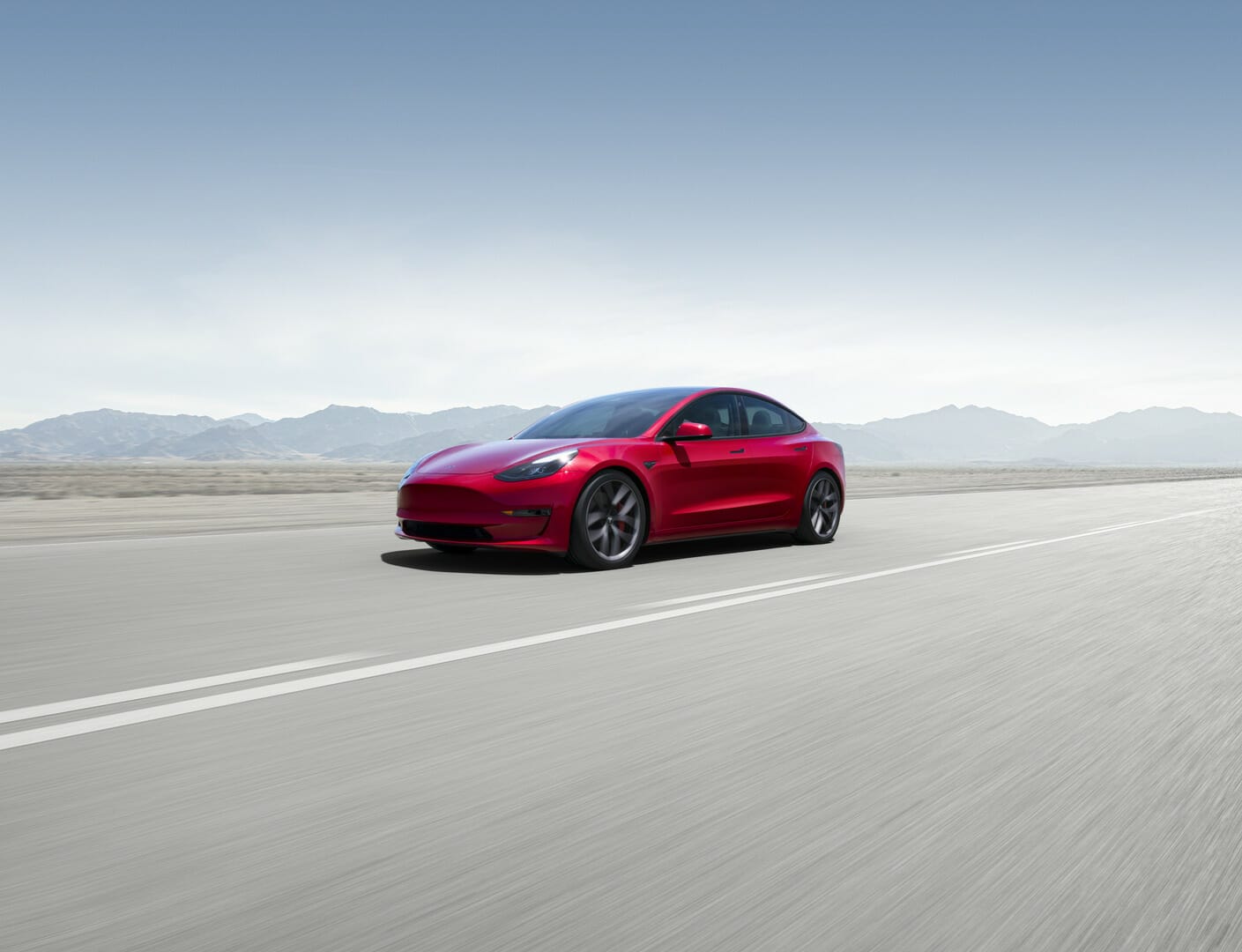
When Tesla introduced the Model 3, it promised to be a more affordable entry point to the fully electric Tesla experience. With the taxes added in Ireland to new vehicles, that entry point will still be out of the reach of many. Nonetheless, it is the most common Tesla to be spotted on Irish roads.
When Tesla got in touch and asked us if we’d like to review the Model 3, I was intrigued to see what the fully electric experience would be like and if it was a viable option to replace the diesel cars I normally use for work and family use.
Rather than just give you a review of the different parts of the car which has been done many times before, I want to share my experience of replacing my usual car, a BMW 520d, with the Model 3 and what I learned from my time with it.
While the Model S may be a more like-for-like comparison with my BMW, the price point of the Model 3 and the 5 Series put them in competition here in Ireland. If I were to change to a Tesla then it would be the Model 3 I would be looking into rather than the Model S which would be in a higher price bracket.
Tesla Model 3 Specs, Versions and Options

Tesla keeps things very straightforward when it comes to options which in turn allows them to produce cars faster. There’s no endless list of extras that you might be used to from the premium German manufacturers.
That’s both good and bad. It means you get a lot of kit included as standard with the Teslas but if there is a feature you’d like to have but it’s not already included then you are out of luck.
The versions available in Ireland consist of either the “Standard Range” Rear-Wheel Drive, the “Long Range” or the “Performance” with the latter two both being Dual Motor All-Wheel Drive. The Longe Range version increases the expected range from 448km to 580km. The Performance version reduces the 0 to 100km/h time from 5.6s down to 3.3s and increases the top speed from 225km/h to 261km/h. It also includes a number of other upgrades to the car such as suspension and wheels.
In addition to this, you can choose between 5 different paint options. White is included in the price but the 4 further options range from €1200 to €2300. There are also a number of different wheel options available.
The car Tesla gave us to review was the Long Range version which came with the upgraded Red Multi-Coat Paint and the 19” Sports Alloys for a total on the road price of €68,725.

User Experience
UX is something that we’d usually use when describing a piece of tech or software we’re reviewing but considering the amount of tech that is being crammed into cars now and how the way we interface with them is changing, it is very relevant here.
Tesla has gone with a bold and almost minimalist approach to the interior and how you interact with the car. It goes against how just about every other manufacturer sets up their car and it is certainly different from what you will be used to.

There is just one large screen in the middle of the dash that is used to control and view everything. While not what you may be used to when it comes to interacting with cars, what it is very familiar with is interacting with something like an iPad.
As a result, it means the learning curve for most will be very short. Yes, it is different, but it is very intuitive. Within a couple of minutes, you will be fully up to speed using the main features but it does take a little time to learn where everything is and there are a lot of features and settings to explore.
Before you even sit in the car, things are a little different with Tesla. Rather than a traditional key or fob, you have a keycard similar to what you would have for a hotel room door.
To unlock the car you hold the keycard against the B pillar. Once inside the car, there is no start or stop button but instead, you tap the keyboard against a point of the centre console. I can’t say I was a huge fan of this way of doing it as I am more used to keyless entry and start/stop systems that just sense the location of the key near or inside the car.

The main controls of the car such as the drive selector, the indicators and manual activation of the wipers are still done by two stalks and there are two scroll wheel buttons on the steering wheel but pretty much everything else is done via the screen.
The sole use of the screen is one of the main criticisms you hear people levelling against this way of interacting with the car. Traditionally people have some muscle memory that allows them to reach down and find knobs or buttons which they use to control things like the heating while driving and as a result, there is very little time spent with your eyes off the road.

There are a few things to break down here. In most cases, once you have the car set up and you have become familiar with how the main features operate there’s very little need to change much when you are on the road.
Wipers and headlights are automatic. You set your mirrors up and unless someone else is driving the car you probably won’t adjust them too much again.

If you want to adjust the temperature in the Model 3 it’s quite easy to do with the plus and minus buttons at the bottom of the screen. Yes, you need to glance over to make sure you are going to tap the right area on the screen but in my BMW I also have to glance down to see what temperature I am setting.
After using it for a while I had no issues with the lack of buttons. It was a little alien not having speed dials behind the steering wheel but you get used to that quickly. It’s a quick glance to the left now rather than a quick glance down. There’s also a lot more info now being offered up than just your speed.

Something I would love to see added though is a heads up display for speed and navigation instructions. I think this would be a great addition and would mean you can keep your eyes facing in the right direction all the time.
Rather than the lack of buttons being a distraction, or the fact you may have to click into a menu to access something, the area that I found was causing my eyes to be off the road most was just the sheer amount of different features that were available via the screen.

There are loads of different ways to consume media while you are on the go. The review car we had came with its own internet connections so you could stream content via TuneIn, download podcasts, add a Spotify account, use a web browser or even have a “Careoke” sing-along for the passengers! It’s fantastic to have such a choice and to be so connected but it’s something you really need to plan before you get going.
Something that is really excellent on the big screen though is the Google Maps based satellite navigation. With so much screen space available it’s really easy to see where you are going. It’s simple to zoom in and rotate the map to get a better view using touch and the voice prompts over the speakers were some of the least annoying I have experienced.

Some other features of note from the interior are the inclusion of two wireless charging pads at the top of the centre console for charging your devices and two USB C ports in the back for keeping your kids happy. There is also a large boot space and the boot door is powered.

What’s it like on the Road
For the vast majority of people, unless you have driven petrol sports cars or motorbikes, you’ll never have experienced acceleration like the Tesla Model 3 can produce.
You go from zero to max torque in such a short period of time that everything just feels instant and quickly you are coming back off the pedal before you get yourself in trouble! While that type of acceleration is good fun and nice to try out, what it means in the real world is that overtaking is a breeze and you are in and out quickly.
Clearly the harder you are pressing on the accelerator the more it is going to cost you in battery so for practical long-range driving that rocket-like acceleration is seldom used.
The ride quality is firm, boarding on sporty but not too much so that it is unforgiving. The car weighs in at just over 1800kg which makes it around 100kg heavier than my BMW but on the road, you would never know. The Model 3 feels nimble and light to drive. It changes direction easily and if you like taking a more energetic drive on some of our back roads it can certainly tick that box.

As is the case normally in Ireland, I had a bit of everything when it came to the weather while we were reviewing the Model 3. From scorching heat to near monsoon rain. The Model 3 was easy to drive in all conditions and there was no wheel slipping or sliding even during the worst rain.
One of the more interesting features of electric cars is the ability to use single-pedal driving. What this means is that by utilising regenerative braking to create resistance when slowing down you effectively don’t need to use the brake pedal.
It takes a little getting used to at first as the braking effect is far more severe than when you come off the accelerator in a diesel or petrol but after a while, you learn to time it correctly and you just modulate the position of the pedal to go faster or slow down. It wasn’t much fun for passengers when I forgot and came off the pedal quickly causing them to jolt forward but it really is an enjoyable way to drive and something I missed instantly when I hopped back into my own car.
I spent a lot of time in the Model 3 while I was reviewing it on both long and short journeys. The interior is spacious even for tall drivers and there is no sense of being cramped. The seats, which are electrically adjustable, were comfortable and easy to position. Considering the fact that there is so much torque on tap, I think there could be more side bolstering added to the seats to hold you in place more firmly.
I’m 187cm tall and with my seating position, I could still sit comfortably in the rear behind the driver seat. The floor is quite high due to the batteries so your knees are elevated a good bit above your hip height. There’s no transmission tunnel so the back floor is flat meaning there is loads of room for moving your feet around and anyone sitting in the middle seat will have a much better experience than normal.

During my testing, I loaded my three boys aged 6, 8 & 11 into the back along with each of their booster seats without any complaints at all. Getting 3 children and their chairs into any car can be a struggle but there were no difficulties with the Model 3.
The Model 3 has a number of cameras placed around the car. When you engage reverse you get a 3 camera view on the screen which makes parking really easy. You can also bring up the cameras at any time when driving if needed.
Bing and Bongs – out of the box so to speak the car makes a lot of different warning noises. Some are quite helpful but others can be a little overbearing. If you try to drive off without first tapping the keycard the car starts binging at you. I know. I should have tapped the card but it’s new to me and I forgot. More than once.
As I drove up my pretty normal driveway each day the system would pick up the kerbs on either side and warn me I was getting too close (even though there was still plenty of room). During our time with the Model 3, we drove it on every type of road we could so when we were making our way down some local coastal roads the car would often warn me I was too close to both sides of the road!
For sure the warnings are helpful to avoid collisions but when we were on some of those narrow back roads and cars were passing pretty close the bings and bongs added to the tension.
I guess the point I’m making here is that there is a fine balance between providing a lot of safety systems, being informative with sounds, warning when needed and then it becoming too often or so annoying that people will either ignore the warnings or look to turn them off.
Range and Charging

Range anxiety is a real thing when you hear people talking about electric cars. Like everything, there are some facts being shared by people and there are some wide misconceptions.
The first thing I need to point out is that I don’t have an EV charging point fitted in my home. I could have of course charged the Tesla via a normal 3 pin plug but that would have taken quite a while and I don’t think it would have been a fair review of its capabilities.
I instead took the opportunity to use public chargers and experience that for the review. I’ll go more into that later but it should go without saying that if you own an EV or are thinking of getting one, you absolutely need a home charger. This is where the vast majority of charging will take place and it will ensure that you have a topped up battery to start your day.
Could you do this without a home charger, let’s say if you lived somewhere you could fit one like an apartment? Yes, you absolutely could but setting aside part of your day to charge the car is going to have to become part of your life and there are other issues such as cost which will also be impacted. I’ll go into more on this below.
I regularly travel to Dublin, which is a 210km round trip for me and mainly done on a Motorway. This is far in excess of the “average” trip taken by Irish drivers but for me, it is something that an electric car would need to do and it’s something I was unsure an EV could do before I reviewed this Model 3.
I questioned some colleagues who likewise had long commutes and no experience of EVs about what their range expectancies and across the board most doubted that EVs would be suitable for them. Even with more and more EVs becoming available and with ranges extending there is still a lack of knowledge amongst people regarding this.
I purposely drove the Model 3 like any other car while testing it. I didn’t try to conserve energy in any way or try to hypermile and the simple fact is the Model 3 could do my commute without issue. There was simply no range anxiety any time while I was using this car even factoring in that I didn’t change it at home.
Charging Network
My observations and experiences here are clearly in no way related to Tesla but they are important to the overall experience.
We don’t have the network of Tesla Superchargers here that some other countries have. Tesla is adding more but there is still a way to go.
The largest network of chargers in the country are managed by the ESB. The vast majority of these are 22kw chargers while some areas also have 50kw chargers. You can find a map of all ESB chargers here.

Outside of the ESB, there are some independent companies such as Ionity who have high powered chargers installed in some of the large motorway services around the country.
During my testing, I tried both the 22kw and 50kw chargers on the ESB network and one of the Ionity chargers.
My experience with the different chargers has been a mixed bag.
I will start with the Ionity charger. Before I took delivery of the Model 3 I had set up an account with the ESB for using the chargers so I would be ready to go. When it came to using that for the first time I couldn’t get it to work so I had to use an Ionity charger as a result.
Setting up an account with Ionity was simple on my mobile. Install an App, add a payment method and you are ready to go. The app walks you through everything and keeps you updated on the charging status remotely. It was flawless from start to finish.
The Ionity chargers are extremely powerful and will charge your EV as fast as it can accept it. They are ideal when stopping at these services for half an hour to grab some food and use the toilet and by the time you get back to your car it will be topped up and you’re ready to hit the road again.
There is only one issue with all of this and that is price. Quite simply you pay for that speed. Each kWh costs 0.73c when using the Ionity chargers. At present at home, I am paying around 15c per kWh for my electricity so you can see the type of premium this is adding. They are extremely convenient chargers, especially if you are on a long trip but they are something you will probably only really use in these circumstances.

The ESB chargers on the other hand were more frustrating to use. I used three in total during my time with the car. One of them worked straight away without issue but the other two had some difficulties.
When you register with the ESB you can either use an app to interact with the chargers or a membership card that is posted out to you after you sign up. There is an NFC reader on the front of the chargers which you are supposed to offer the card up to and then follow the on-screen instructions.
With the first ESB charger I went to, a 50kW unit, the card reader was not working on the front of the machine. No problem, I swapped to the app. Within the app you find the charging station you are at, select the charger and swipe to start the process. You are then supposed to connect the charging cable and come back and hit start on the screen. I tried several times but could not get it to start charging. I eventually gave up and moved to the Ionity charger mentioned above.
The second ESB charger I used was one of their 22kW units which are a little more basic than the 50kW units. When I presented my card to this it kept rejecting it. I swapped to the app again, followed the instructions and then nothing. After about 5 minutes everything would time out and you would be back to square one. I followed the same procedure again another four times and on the fourth time, just as I was about to give up, it started working.
At both the chargers I had issues with there were also other people there trying to charge different EVs and both expressed their frustrations with using the charge points.

The other thing that really bugged me about the ESB chargers is the fact that if you charge your car for more than 45 minutes there is a long stay charge of €4.60!!! Now I fully understand that the last thing you want is someone rocking up and taking a charging point and leaving their car parked there for the day. There needs to be a disincentive to prevent this from happening.
On the other hand though, if my car is still actually charging and not just left parked there I should be allowed to charge my car without penalty. If the car has stopped charging, give me a grace period of a few minutes to get back to the car and disconnect it and then hit me with a charge if I don’t.
As a good citizen, I tried to report issues I experienced with the charging stations via the ESB app but when I tried to submit the feedback it wouldn’t accept it! There seems to be some issue with that part of the app where it thinks you haven’t entered text in the field even when you have. There is a phone number on the charging points that you can ring for assistance if needed.
Ionity Charging Point

Battery Status Pre charging:

Setting up:

Result:


In total just under 29kWh was delivered to the battery costing €21.08. The range increased from 327km to 538km in 44 minutes of charging.
ESB 22kW Charging Point

Battery Status Pre charging:

Result:

Over a 33 minute period, 5.6kWh was added to the battery costing €1.50 and increasing the range from 377km to 415km. The unit cost per kWh is €0.268.
In comparison when using the 50kw ESB charger, over a 46 minute period 38.5kWh was added to the battery costing €11.53. The unit cost per kWh is €0.305.
Autopilot
Many of you have probably seen the recent news that Tesla released a major update to their full self-driving beta. Unfortunately, this is not something I got to test out.
The main features I tested out were the distance and speed controlled cruise control and the lane assist functions. When driving on a motorway these two features are excellent to have and hand over the mundane tasks of this type of driving to the car.
When you are at speed and want to engage the cruise control function you pull down once on the gear selector. It sets the current speed as its max and should traffic slow down in front of you it likewise slows you down too. Once clear, the speed will increase back to the setpoint.
The lane assist function uses the cameras onboard to pick up the road markings and then applies steering input to keep you between the lines. In general, I found it worked very well but there were occasions when the road started rising and you just came over the crest where the car could make a sudden correction to the steering, possibly as the system lost sight of the markings.

The Model 3 also comes with a number of different driver safety systems to prevent you from crashing. These include Emergency Lane Departure Avoidance, Blind Spot Collision Warning Chime, Automatic Emergency Brake and Obstacle Aware Acceleration. Anything that keeps you and others from harm are welcomed additions and personally, the emergency brake function has saved me while driving another car in the past from rear-ending someone who jammed on with the intention of making me crash into them.
That leads on to another feature that can be used to help with scams like that. You can use the onboard cameras to capture dashcam type footage. Inside the glove box, there is an additional USB port that allows you to connect a hard drive to record the footage.
There is also a feature called Sentry mode which saves footage and alerts you should anyone come close to the car while it is parked up. Nice features to have as standard and invaluable should something happen that you need footage to back up your side of events.
Quality, Fit and Finish
In the past, I have read criticisms of the fit and finish in Tesla cars. While I don’t have experience of older Tesla models to reference I have plenty of experience with the premium German brands having owned various models from all of them. So from that perspective, I can assess where the Model 3 stands.
To start with the interior, everything is solid with soft-touch parts where you expect them and there wasn’t a single creak or crack out of the interior while we reviewed the car. Even on the bumpy little back roads we were on, there wasn’t a peep out of the interior.

The material the seats are made from at first look seemed like it would be very soft and easy to damage or stain but it is actually really easy to keep clean. My kids put it to the test with sticky and muddy hands and it all easily wiped off and looked like new again. A more long term review would be required to see how it holds up but I certainly wouldn’t have any concerns after my time with it.
Outside the paint finish looks excellent and it stayed very clean during our testing even in terrible weather. Panel gaps were all perfect and to my eyes, everything seems spot on. I would have no concerns at all from my experience. It feels quality and it’s what you expect at this price point.

Brand Awareness
This is something that really stood out to me during my time reviewing the Model 3 and it’s something other car manufacturers should be taking note of.
While I was charging the Model 3 at the different charging points, people would just randomly come over and start talking to me about the car and asking questions.
When you drive into a car park peoples’ heads turn.
When I told people I was reviewing the Model 3 people were genuinely excited about it. I have been many years reviewing the latest tech products. The last time I remember this much interest in something I was reviewing was back when the iPhone launched. There are certainly many parallels here between the brand awareness that Apple enjoys and what Tesla now seems to be enjoying in the car space.
From age 6 to 18 every child or teen we encountered knew what the car brand was and many started telling us things about Elon Musk and SpaceX.
Conclusion

For me as someone who had no EV experience and many questions about what it would be like to use one every day, I think the highest compliment I can pay to the Model 3 is that it is ready to replace combustion-engined cars for me and I would have no anxiety about switching.
For sure you need a proper home charger to get the best experience but even without that it was still easy and I was never concerned about running out of charge.
This version of the Model 3 feels very refined but if this is the future of how we use cars then as a country we need to figure out how we can bring about change to lower the price of entry. The Model 3 we reviewed has the guts of €15,000 in taxes included in the price and that really needs to change more substantially if you want to encourage more people to make the jump.
If you are thinking about buying an EV I would happily recommend you consider the Tesla Model 3. I enjoyed my time reviewing it and it has left me with a more positive opinion of fully electric cars.
You can find out more about the car here: https://www.tesla.com/en_ie/model3


More about Irish Tech News
Irish Tech News are Ireland’s No. 1 Online Tech Publication and often Ireland’s No.1 Tech Podcast too.
You can find hundreds of fantastic previous episodes and subscribe using whatever platform you like via our Anchor.fm page here: https://anchor.fm/irish-tech-news
If you’d like to be featured in an upcoming Podcast email us at [email protected] now to discuss.
Irish Tech News have a range of services available to help promote your business. Why not drop us a line at [email protected] now to find out more about how we can help you reach our audience.
You can also find and follow us on Twitter, LinkedIn, Facebook, Instagram, TikTok and Snapchat.