Pilot project measuring CO2 to support Dublin City achieve its ambitions as part of the EU Cities Mission to make 112 European cities climate neutral by 2030. M...
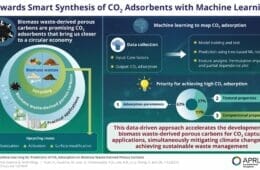
Biomass waste can be used to produce porous carbons capable of sequestering CO2 gas emitted from large point sources (e.g., power plants, cement industries) for...
This article was written by Tom Spencer, and edited by Jonathan Finlay.
Over recent years there has been a growing awareness about the importance of aiding pollinators in private gardens and public spaces by reducing mowing of grassy areas, and pl...
On the occasion of World MeatOut Day, Foods for Tomorrow has analyzed the environmental impact of the entire population substituting animal meat with plant-base...
It is important that we have clean and energy efficient buses, trucks and delivery vans in our cities, according to Ireland South MEP, Deirdre Clune. With peopl...
MEPs have proposed setting a higher target for reducing EU fleet-wide emissions for new cars by 2030 of 40%, with an intermediate target of 20% by 2025. Similar targets have been suggested for new vans.
Manufacturers whose average CO2 emissions e...
The level of emissions coming from Ireland's transport sector is undeniably high, which is of particular concern when considering the country's commitment to a ...
A new process for water filtration using carbon dioxide consumes one thousand times less energy than conventional methods, scientific research published this we...
Researchers from across Europe, led by University of Limerick (UL), have begun a project to produce carbon fibre from forestry by-products.
Carbon fibre is a reinforcement which when added to plastic improves its mechanical properties thereby form...