

Interesting interview with Tom and Stephanie Green who were the first people to live in the, then, newly established Bird Observatory on Cape Clear island, from 1969 to 1969. The Observatory recently celebrated it’s 60th aniversary, and sixty years of bird watching related activities on the island, which have often resulted in many unique and special bird citings, often the first for Ireland and even Europe too.
Tom and Stephanie recently returned to Cape Clear and we were privileged to catch up with them and learn a little more about their experiences on the island, as well as their broader perspectives on environmental issues affecting us all globally too.
Cape Clear Island, West Cork looking back 40 years
Firstly what was it like to build a rapport with the locals on the island across the last six decades?
Our relationship with islanders has been hard won over many years, and something that we value very deeply. While some might suggest the islanders were insular, I would disagree, and, as a geographer could I suggest that isolated is a more accurate term if you had to come up with something to describe them when we lived there in the 1960s.
You have some fantastic and evocative images of island life from your time on the island, what are some of your favourite images?
Below are several images that we took, and remember that back then it was much more expensive to take and develop photographs, so I was only able to shoot a few rolls during my time there. You will find most of these in my book about our experiences of living on Cape Clear too.

Loading a bull onto the Mailboat 1968


North Harbour Life 1969
When was the first time you both came to Cape Clear?
I (Tom) first visited the island as a 17 year old in 1961 and came regularly till ’68. I then returned, after marrying Stephanie for the year-long residency (as Wardens of the Bird Observatory) in 1968/69.
How long was gap between being on Cape then, and when you next returned?
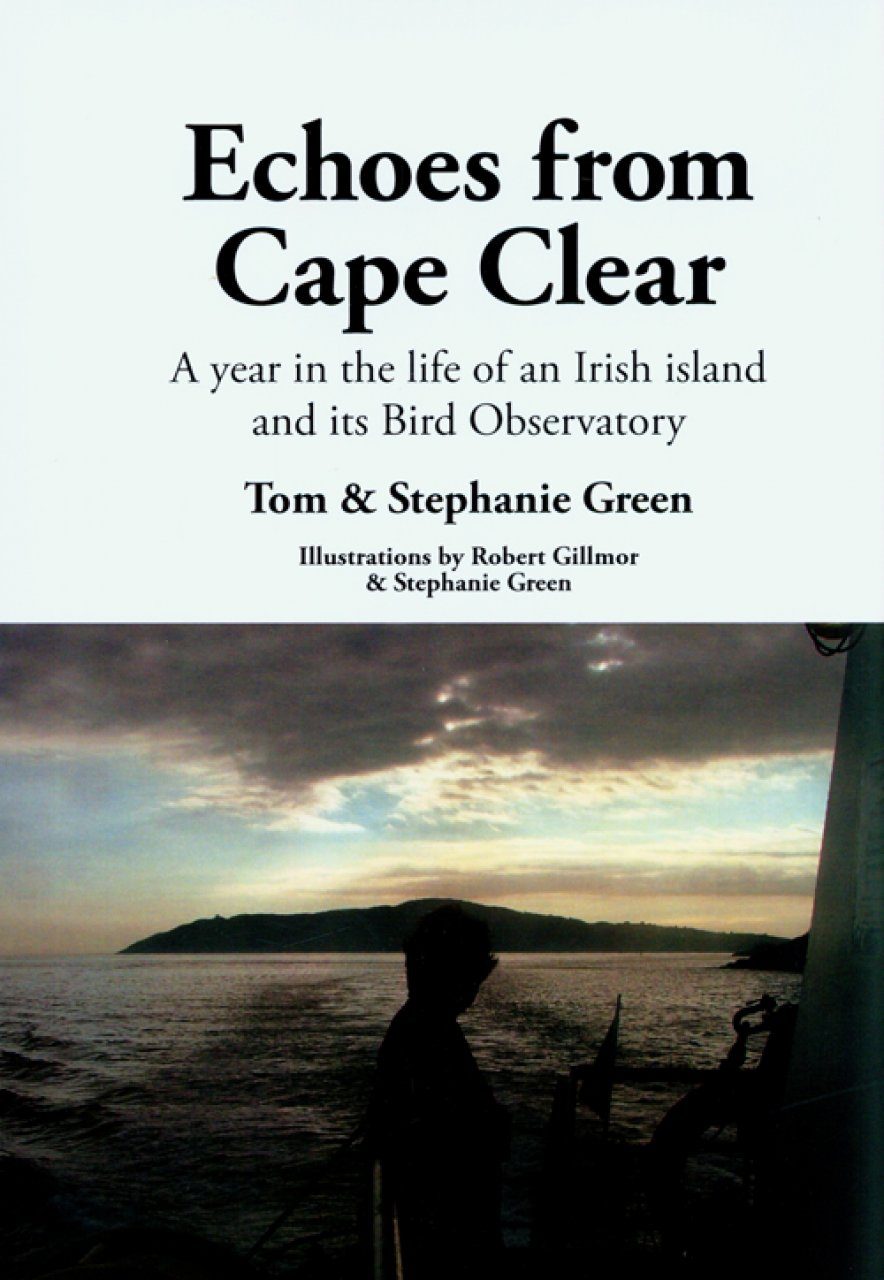
We came back for short visits in 1975, and brought our 3 children, in 1980, and again in 2007, to collect extra material for book. We had been thinking about a book for some time, but we were then nudged by friends to do it. We then came back in 2009 for the 50th Anniversary of the Bird Observatory and the book launch of our book Echoes from Cape
Clear.
How different is Cape Clear now to how it was then?
There is electricity and water on the island now, and there were only a few people with generators then too, so this is a big difference. There was also one phone, at the Post Office, with a windup handle, and it was not always possible to get through to Baltimore. Many of the differences were captured in Stephanies’s letters, written, in 1968/9 to her mother which we later used for the book too.
The island and islanders were more isolated then, physically, because of
constraints for individuals due to the lack of transport, and there was also no TV, which is of course very different from today. However, this meant that there was necessarily a strong esprit de corps and social cohesion. The island had to be much more self-sufficient, and most households had cows, pigs, chickens, and lazy beds, as well as some fishing too. There were three vibrant pubs too, and we were also busy with having a young baby and the fact that more of the chores had to be done by hand back then.
The Naimh Ciaron, the ferry of the time, sailed three times a week, so there was little or no tourism, and we were the only nonlocals resident on the island. Around this time the resident Priest also helped set up the coop, which began to do things such as selling souvenir items such as postcards and local knitwear. The Irish college was also built, as the island began to host summer students coming to learn Irish, which then provided a new source of new income too.
How many people were there on the island then?
There 134 people at that time, with three active pubs including Paddy Burkes, that would see cornflakes at 10pm and Guinness at 10 am. You could order food from Fields in Skibbereen, and the food would come in by the Mail-boat. North harbour was very much the beating heart of the island when these deliveries came in. It was a very different time then, the priest still had a sense of authority, and things felt very different in the 1960s. For example in Cork, Stephanie was shouted at by one woman for wearing long trousers!
By the late 1960s many of the original houses and farm holdings had been deserted. The introduction of the electric fences now used to constrain livestock has resulted in a further deterioration of the traditional walls. North Harbour was very different, now the lights are stronger and more intrusive with larger areas set aside for vehicles and modern buildings. Work to the North Harbour was needed after general deterioration storms but the modernisation has resulted in a less rural and perhaps less charming atmosphere.
The moorland, cliffs and parts of the west are pretty much unchanged, but many island views have been inevitably modified by the presence of
overhead cables, modern houses and cars. There are also more trees on the island now than when we were here. The Western end of the island looks more or less the same. In the 1960s there was much less beef farming, there were only cows for dairy, with lots of milk and cream. There was also more arable land, whereas now it is more grazing. Then all the houses were self sufficient small holdings, with hens, potatoes, and grants for speaking Irish.
What tasks did you have to carry out?
Part of the remit for our year on the island was to carry out educational activities, as the Bird Observatory had initially come about from the first pioneer birdwatching group from UK that visited Cape a decade earlier. The aim was to inspire future generations too. We did field courses for UCC, and for all visitors to learn more about birdwatching and bird-ringing. Also simply by being here on the island it had a positive impact.
We shared our interest and observations with islanders, and, once locals got interested, they then told us about what they had seen when they were out and about. The bird log still continues too, and is still done manually, though the way the data is analysed is now computer based, and we’re learning far more from the data now.
See more interviews here.
More information about Irish Tech News and the Business Showcase
FYI the ROI for you is => Irish Tech News now gets over 1.5 million monthly views, and up to 900k monthly unique visitors, from over 160 countries. We have over 860,000 relevant followers on Twitter on our various accounts & were recently described as Ireland’s leading online tech news site and Ireland’s answer to TechCrunch, so we can offer you a good audience!
Since introducing desktop notifications a short time ago, which notify readers directly in their browser of new articles being published, over 16000 people have now signed up to receive them ensuring they are instantly kept up to date on all our latest content. Desktop notifications offer a unique method of serving content directly to verified readers and bypass the issue of content
getting lost in people’s crowded news feeds.
Drop us a line if you want to be featured, guest post, suggest a possible interview, or just let us know what you would like to see more of in our future articles. We’re always open to new and interesting suggestions for informative and different articles. Contact us, by email, twitter or whatever social media works for you and hopefully we can share your story too and reach our global audience.
Irish Tech News
If you would like to have your company featured in the Irish Tech News Business Showcase, get in contact with us at [email protected] or on Twitter: @SimonCocking