Artificial intelligence (AI) is rapidly reshaping the cybersecurity landscape across Ireland. While it’s unlocking new efficiencies and accelerating innovation, it’s also giving cybercriminals new evasive tools to launch faster and more sophisticated attacks.
Across Ireland, organisations are navigating a new era of cyber risk defined by speed, sophistication, and AI. As Dell Technologies continues to work closely with Irish businesses to modernise their digital infrastructure, it’s clear that cybersecurity must evolve in tandem, as a strategic enabler of trust and resilience.
Threat actors are using AI to enhance ransomware, zero-day vulnerabilities, Distributed Denial of Service (DDoS) all making advanced spear-phishing much harder to identify, outpacing conventional security measures.
According to the latest Dell Technologies Innovation Catalyst Study, 84% of Irish organisations view security as a key part of their business strategy, yet many continue to struggle with balancing innovation and security. Almost all respondents (96%) admitted that integrating security into wider business strategies is proving difficult. These figures highlight that organisations must rethink their cybersecurity strategies to adopt proactive, intelligent, and resilient approaches that keep pace with the evolving threat environment.
As threat actors use AI to scout, steal credentials and adapt attack techniques, traditional perimeter-based defences fall short.
That’s why more Irish organisations are adopting a Zero Trust model built on the principle of “never trust, always verify” ensuring that every user, device, and application is continuously authenticated, regardless of location.
The benefits are clear; the latest Innovation Catalyst Study revealed a 100% increase in confidence levels among Irish organisations that have adopted zero trust principles, underscoring its growing value as a security framework. By implementing zero trust principles, organisations can help reduce risk by continuously verifying every access request and implementing strict authentication processes. Using role-based access controls (RBAC) and network segmentation, organisations can minimise the risk of an attack and reduce the impact radius if an attack occurs.
Zero trust is more than a security philosophy. It’s a unified and adaptive strategy for identity and access management. Through a zero trust approach, organisations not only reduce their attack surface, but also strengthen their ability to detect, respond to and contain threats.
In an environment where AI-powered threat actors are constantly probing for weaknesses, reducing the attack surface is a critical line of defence. Every exposed endpoint, unsecured API, or overlooked supply chain vulnerability represents an opportunity for adversaries to infiltrate systems, deploy malware and exfiltrate sensitive data.
To mitigate these risks, Irish organisations should begin with assessing and understanding their attack surface and related vulnerabilities. From there, they should have a layered defence strategy focused on securing entry points and minimising exposure. This includes strengthening authentication, encrypting data, regularly testing for vulnerabilities and actively monitoring endpoints. Keeping systems patched and devices hardened further limits risks.
By reducing the attack surface, organisations make themselves a harder target, thereby decreasing the likelihood of an attack.
AI-powered attacks are capable of mimicking legitimate behaviour and evading traditional security tools, and organisations need to combine advanced threat detection with rapid response capabilities.
Leveraging AI and machine learning, organisations can monitor operational data, detect anomalies, and trigger automated responses in real time.
This AI-powered threat intelligence system builds upon itself, making it smarter and better able to identify and address attacks.
For many Irish organisations who need assistance scaling threat detection and response. Partnering with a trusted third-party provider offers round-the-clock monitoring, faster reaction times, and support in managing complex security operations. Dell Technologies continues to invest in AI-driven security solutions that help Irish organisations stay ahead of emerging threats while simplifying operational complexity.
While prevention is often the first step to a cybersecurity strategy, a strong cybersecurity strategy includes not only prevention but also a well-defined plan for response and recovery.
Organisations here in Ireland need to create and routinely practice a robust Incident Response and Recovery (IRR) plan that outlines how to detect, contain, communicate and recover from cyber incidents. The plan should outline departmental roles and responsibilities, internal and external contacts and partners, communication protocols and include regular testing. Preapproved messaging templates and routine plan updates are also essential to maintaining operational continuity during a crisis.
Backing up critical data and applications offline or separated from production workloads helps guard it against ransomware attacks and ensures business continuity.
By preparing for disruption, Irish organisations can restore critical functions with resilience, speed, and confidence.
Technology alone isn’t enough; employees remain the most critical line of defence. Organisations here in Ireland need to create a culture of vigilance through employee awareness programmes that integrate continuous education, open communication, real-world simulations, and a culture of shared accountability. For example, incorporating attack simulations that reflect AI-specific threats like advanced phishing and deepfakes helps equip employees to recognise and respond to evolving threat actor tactics.
Collaboration across the technology ecosystem also plays a vital role in strengthening cyber resilience. Dell Technologies, together with partners like NVIDIA, is helping organisations better understand how AI-driven attacks evolve.
NVIDIA’s new AI Kill Chain Framework reimagines the traditional Cyber Kill Chain for the AI era, outlining how adversaries target AI systems through stages such as Recon, Poison, Hijack, Persist, and Impact — often cycling through these stages to adapt and escalate their tactics. This framework offers valuable insights into how attackers probe, manipulate, and maintain access within AI ecosystems, helping defenders anticipate and disrupt evolving threats before they lead to broader compromise.
As threat actors evolve using AI to launch increasingly sophisticated attacks, organisations must respond with equal force and foresight. Traditional defences alone are insufficient. A modern cybersecurity strategy demands a proactive, layered approach that integrates advanced technologies, incident response planning, and a vigilant workforce.
As we mark Cybersecurity Awareness Month, it’s an important reminder that AI is transforming both the opportunities and the risks facing Irish businesses, making it more critical than ever to invest in continuous vigilance, awareness, and adaptation. By embedding resilience at every level of their cybersecurity strategy, Irish organisations can better safeguard their operations and lead with confidence in an increasingly AI-driven world.
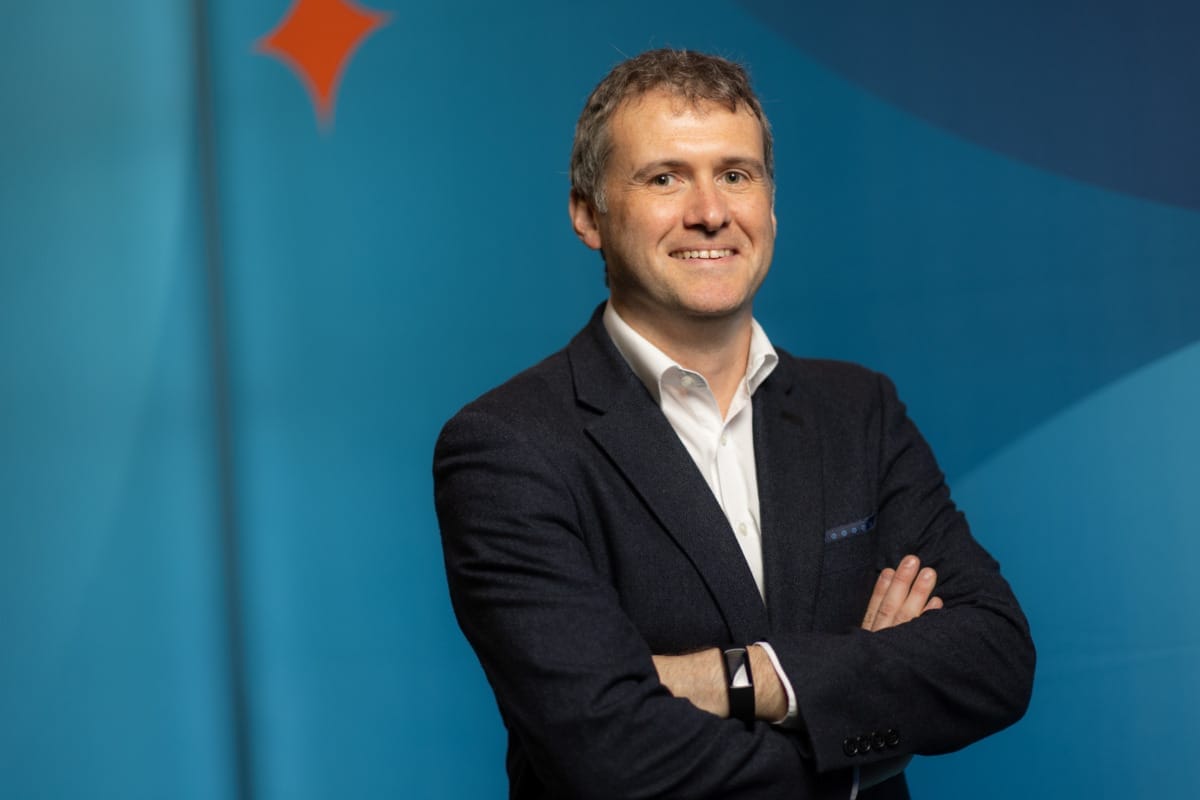
Guest post by Ivor Buckley, Field CTO at Dell Technologies
Leading digital bank Monzo has released its inaugural edition of ‘The Monzo Money Pulse’, a…
Irish CEOs are entering 2026 with urgency and focus, responding to rising cost pressures, geopolitical…
Ireland’s transition to electrified mobility continues to strengthen, with two in five Irish consumers (40%)…
South East Technological University’s (SETU) sixth annual Women in Technology event will bring together role…
By David Stephen who looks at the idea of Digital Insurance and how it could…
Irish small and medium-sized enterprises (SMEs) are increasingly aware of the growing risk posed by…
Irish Tech News are Ireland’s No. 1 Online Tech Publication and often Ireland’s No.1 Tech Podcast too.
You can find hundreds of fantastic previous episodes and subscribe using whatever platform you like via our Anchor.fm page here: https://anchor.fm/irish-tech-news
If you’d like to be featured in an upcoming Podcast email us at Simon@IrishTechNews.ie now to discuss.
Irish Tech News have a range of services available to help promote your business. Why not drop us a line at Info@IrishTechNews.ie now to find out more about how we can help you reach our audience.
You can also find and follow us on Twitter, LinkedIn, Facebook, Instagram, TikTok and Snapchat.