
Latest article by Theodora Lau, see more articles by her here.
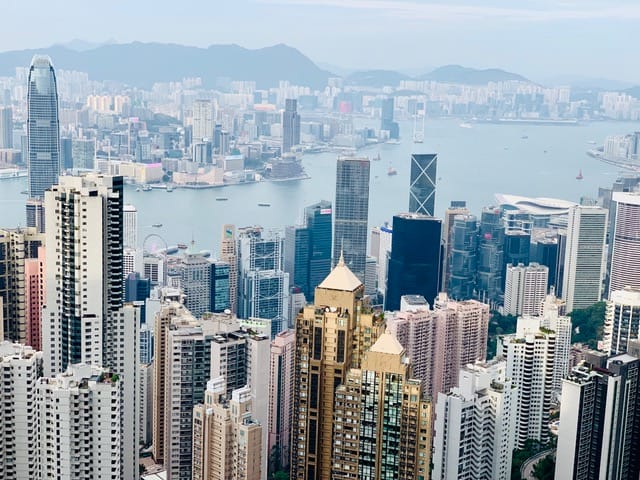
Hong Kong, also known as the “Peal of Orient”, is home to 7.4 million people from countries around the world. It consists of Hong Kong Island, Kowloon peninsula (which borders mainland China), and many smaller islands, with total footprint less than Manhattan. It is a land of dream, hope, and resilience. It is also a city filled with people who believe that hard work will bring them a prosperous future, who continue to re-invent themselves despite all odds.
It is also the city where I was born and raised before uprooting to New York.
Much has changed since then; and much hasn’t.
Cruising down the memory lane
After the Opium War, Hong Kong Island became a colony of Great Britain in August 1842 and banknotes were first issued four years later by the Oriental Bank Corporation. In 1860, China ceded Kowloon Peninsular to Britain. The first Hong Kong coins were issued subsequently in 1864 and the first government note was born 1935. With the imminent handover of the colony to the Chinese government (in 1997), new Bauhinia design began to replace the Queen’s head coins in 1993. On July 1, 1997, Hong Kong became a Special Administrative Region (SAR) of China.
The Octopus card was also born in the same year (1997), and has since become a prominent stored value payment system in Hong Kong. The amount of notes and coins in circulation has also gone up from HK$185 million in 2008 to over HK$419 million in 2016. In spite of the popularity of digital payments, cash is still widely accepted in the territory.
Announcements in public transportation are now made in three languages (English, Cantonese, and Mandarin) instead of two. The city is as crowded as before, if not more. Victoria Harbour has shrunk by half due to land reclamation. Star Ferry, which has been operating since 1888, is still running. The Mass Transit Railway (MTR), a prominent transportation option for the millions living on the island and peninsular, has been humming along since late 70s, and runs amazingly well compared to our Metro system in DC. Hong Kong is now also more connected to the mainland than ever, with highspeed rail and a new bay bridge.
A booming fintech hub
Hong Kong is also the third most attractive financial center globally and best in Asia according to the Global Financial Centers Index (GFCI), with 159 banks (and 70 of the world’s 100 top banks) and 160 authorized insurers. The territory has seen strong grown in fintech startups in the past two years, especially in the areas of wealthtech and blockchain, thanks to an open economy, strong support by the Hong Kong Government, and favorable tax system.
It is the link between the East and the West, a landing pad for fintech companies eyeing opportunities in Asia, and a launch pad for Chinese mainland fintech companies expanding abroad.
It is with that sentiment that we are excited for the launch of our brand new podcast series, Red Envelope, where we will dive into some of the top trends in the region’s leading digital economies, and explore the intersection between culture and cutting edge technology.
So what can we learn from the East? Tune in to our new series and find out.
***
Listen in to our conversation with Charles d’Haussy, on our new episode of The Red Envelope on iTunesand Spotify, as we talk about the Hong Kong FinTech scene and much more, as well as other episodes in the series too.
If you would like to have your company featured in the Irish Tech News Business Showcase, get in contact with us at [email protected] or on Twitter: @SimonCocking
More about Irish Tech News
Irish Tech News are Ireland’s No. 1 Online Tech Publication and often Ireland’s No.1 Tech Podcast too.
You can find hundreds of fantastic previous episodes and subscribe using whatever platform you like via our Anchor.fm page here: https://anchor.fm/irish-tech-news
If you’d like to be featured in an upcoming Podcast email us at [email protected] now to discuss.
Irish Tech News have a range of services available to help promote your business. Why not drop us a line at [email protected] now to find out more about how we can help you reach our audience.
You can also find and follow us on Twitter, LinkedIn, Facebook, Instagram, TikTok and Snapchat.